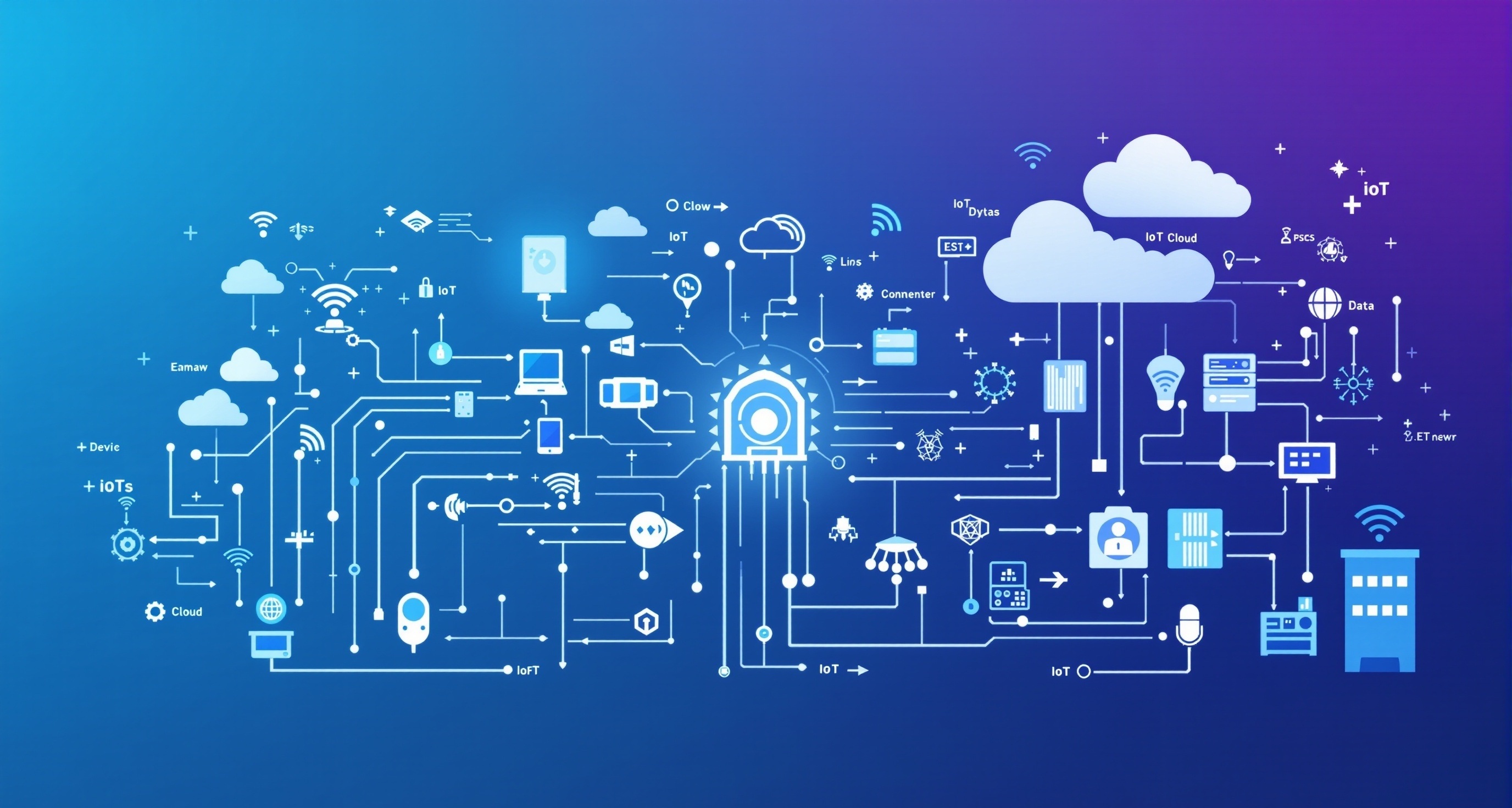
IoT Project Requirements: From Device to Cloud
A Comprehensive Beginner-Friendly Guide to Building Successful IoT Solutions
The Internet of Things (IoT) is revolutionizing how we interact with the world around us. From smart homes to industrial automation, IoT systems are connecting billions of devices to the cloud, creating unprecedented opportunities for innovation. However, building a successful IoT project requires careful planning and comprehensive requirements documentation. This guide will walk you through every essential step—from selecting the right hardware to deploying your solution in the cloud—ensuring your IoT project is built on a solid foundation.
Understanding IoT Systems: The Foundation
Before diving into requirements, it's crucial to understand what makes up an IoT system. The Internet of Things represents the integration of physical devices, sensors, computing systems, and cloud infrastructure that work together to collect, transmit, process, and act upon data. These systems have transformed industries from healthcare and manufacturing to transportation and agriculture, creating smarter, more efficient operations.
Physical components including sensors, actuators, cameras, and microcontrollers that collect and transmit data from the real world.
Network protocols and technologies like Wi-Fi, Bluetooth, LoRaWAN, and cellular that enable device communication.
Local processing power that handles real-time data analysis and reduces latency before sending to the cloud.
Scalable infrastructure for data storage, advanced analytics, machine learning, and application hosting.
According to recent industry reports, there are over 3,300 active IoT startups globally, with investment reaching $16.2 billion in 2024. The IoT market continues to expand rapidly, making proper requirements management more critical than ever for project success.
The IoT Architecture: Device to Cloud Journey
Understanding the complete journey from device to cloud is essential for defining your project requirements. Each layer has specific technical requirements that must be carefully documented and validated.
Sensors, actuators, and embedded systems collect real-world data
Local processing, protocol translation, and data aggregation
Secure data transmission via various connectivity protocols
Data storage, analytics, ML models, and application services
Web/mobile apps for monitoring, control, and insights
Defining Hardware Requirements: The Physical Foundation
Hardware requirements form the physical backbone of your IoT system. Getting these specifications right from the start prevents costly redesigns and ensures your devices can perform their intended functions reliably.
Core Hardware Components
Microcontroller/Processor Selection
Choose between ARM-based processors (Cortex-A53) for complex tasks or lower-power options for simple sensing. Minimum 256 MB RAM recommended, but 512 MB or more provides better performance. Consider processing requirements for your specific use case.
Power Requirements
Define voltage requirements (3.3V, 5V, 12V), current consumption (idle and active), battery life expectations, and power source options (battery, solar, AC). Battery-powered devices should aim for months or years of operation.
Sensor Specifications
Document required sensor types (temperature, humidity, motion, light), accuracy requirements, sampling rates, calibration needs, and environmental operating ranges. Sensor selection directly impacts data quality.
Storage Capacity
Minimum 2 GB for basic IoT devices, but consider local data buffering needs for offline operation. Plan for firmware storage, logs, and temporary data caching requirements.
Environmental Specifications
Define operating temperature ranges, humidity tolerance, IP ratings for water/dust resistance, shock and vibration resistance, and certifications needed (FCC, CE, UL) for your deployment environment.
Minimum RAM for IoT Devices
Recommended Storage
Bit Architecture
Connectivity & Protocol Requirements: Building the Communication Layer
Choosing the right connectivity protocols is critical for reliable data transmission. Your selection depends on factors like range, power consumption, bandwidth requirements, and deployment environment.
IoT Communication Protocols Comparison
| Protocol | Range | Data Rate | Power Usage | Best Use Case |
|---|---|---|---|---|
| MQTT | Unlimited (IP-based) | Varies | Low | Cloud messaging, real-time updates |
| CoAP | Unlimited (IP-based) | Varies | Very Low | Constrained devices, RESTful IoT |
| LoRaWAN | 2-15 km | 0.3-50 kbps | Very Low | Long-range sensing, smart cities |
| Zigbee | 10-100 m | Up to 250 kbps | Low | Home automation, mesh networks |
| Bluetooth/BLE | 10-100 m | 1-3 Mbps | Low | Wearables, proximity-based apps |
| Wi-Fi | 50-100 m | Up to 600 Mbps | Medium-High | High-bandwidth, video streaming |
| LTE-M/NB-IoT | 10+ km | 1 Mbps / 250 kbps | Low | Mobile IoT, wide-area coverage |
When selecting your connectivity protocol, consider: Range requirements (how far devices are from gateways), Power constraints (battery life expectations), Data payload size (sensor readings vs. video), Latency tolerance (real-time vs. periodic updates), Network availability (existing infrastructure), and Cost considerations (hardware, subscriptions, data plans).
Software & Application Requirements: The Intelligence Layer
Software requirements define how your IoT system processes, analyzes, and acts upon collected data. This includes embedded firmware, edge processing logic, cloud applications, and user interfaces.
Essential Software Components
- Device Firmware: Embedded code managing sensors, actuators, local processing, and communication protocols. Must support OTA updates for remote maintenance.
- Edge Computing Logic: Local data filtering, aggregation, and preprocessing to reduce bandwidth and latency. Includes anomaly detection and emergency response logic.
- Cloud Backend Services: APIs for device management, data ingestion pipelines, database systems, authentication/authorization, and business logic.
- Data Analytics Engine: Real-time stream processing, batch analytics, machine learning models, and predictive algorithms for insights.
- User Applications: Web dashboards, mobile apps, notification systems, and reporting tools for monitoring and control.
- Integration Interfaces: APIs and webhooks for third-party system integration, data export capabilities, and enterprise system connections.
Programming languages vary by layer: C/C++ for embedded firmware, Python/Node.js for edge computing, Java/Python/Go for cloud services, and JavaScript frameworks (React, Vue) for web interfaces. Choose languages based on team expertise, performance requirements, and ecosystem support.
Cloud Platform Requirements: Choosing Your Infrastructure
Your cloud platform choice significantly impacts scalability, cost, and capabilities. The three major players—AWS IoT, Azure IoT, and Google Cloud IoT—each offer distinct advantages depending on your project needs.
- ✓ Extensive feature set and maturity
- ✓ IoT Core for device management
- ✓ Greengrass for edge computing
- ✓ Superior scalability options
- ✓ Broad integration ecosystem
- ✓ Pay-per-use pricing model
- ✓ Best for Microsoft environments
- ✓ IoT Hub for device connectivity
- ✓ Strong hybrid cloud support
- ✓ Azure Digital Twins modeling
- ✓ Enterprise integration tools
- ✓ Comprehensive security features
- ✓ Superior AI/ML capabilities
- ✓ BigQuery for analytics
- ✓ TensorFlow integration
- ✓ Strong data analytics focus
- ✓ Competitive pricing model
- ✓ Kubernetes-native approach
Cloud Requirements Checklist
Security & Privacy Requirements: Protecting Your IoT Ecosystem
Security is paramount in IoT systems, as they often collect sensitive data and control critical infrastructure. IoT devices are frequently targeted by attackers, making comprehensive security requirements essential from day one.
Device Authentication
Implement strong device identity management using X.509 certificates or secure key provisioning. Each device must have unique credentials. Support secure boot and trusted execution environments where appropriate.
Data Encryption
Encrypt data in transit using TLS 1.2 or higher for all communications. Encrypt sensitive data at rest in both devices and cloud storage. Define key management strategies and rotation policies.
Access Control
Implement role-based access control (RBAC) for users and services. Use OAuth 2.0 or similar standards for API authentication. Support multi-factor authentication for administrative access.
Firmware Updates
Support secure over-the-air (OTA) updates with signed firmware images. Implement rollback capabilities for failed updates. Maintain update logs and version tracking for compliance.
Privacy Compliance
Ensure GDPR, CCPA, or relevant regional privacy law compliance. Implement data minimization principles. Provide user consent mechanisms and data deletion capabilities. Document data retention policies.
Remember the critical security pillars: Connectivity (secure communication channels), Continuity (reliable operations), Compliance (regulatory adherence), Coexistence (integration security), and Cybersecurity (comprehensive protection). The sixth C, Customer Experience, ensures security doesn't compromise usability.
Ready to Build Your IoT Solution?
Let our experts help you define and document your IoT project requirements for success from the start.
Get Expert ConsultationRequirements Documentation Best Practices
Proper documentation is the cornerstone of successful IoT project management. Well-documented requirements ensure all stakeholders understand project scope, reduce miscommunication, and provide a reference point throughout development.
Organize requirements hierarchically by system layer (device, edge, network, cloud, application). Use consistent formatting and numbering schemes.
Engage all stakeholders—end users, developers, business owners—throughout requirements gathering using interviews, surveys, and workshops.
Categorize requirements as Must-have, Should-have, Could-have, and Won't-have to prioritize development efforts and manage scope.
Maintain bidirectional traceability between requirements, design decisions, implementation, and testing to ensure complete coverage.
Use tools like Valispace, JIRA, or specialized requirements management platforms to track changes, maintain history, and manage approvals.
Define clear acceptance criteria for each requirement. Ensure requirements are testable and verifiable through defined metrics and tests.
Requirements Management Tools for IoT Projects
Specialized tools help teams collaborate, track changes, and maintain requirements throughout the project lifecycle. Here are leading platforms used by successful IoT teams:
Valispace
Specialized for engineering projects with unique capability to link requirements to technical data and engineering values. Automatic impact analysis when parameters change. Ideal for complex technical IoT systems with hardware/software integration.
IBM Rational DOORS
Enterprise-grade requirements management with comprehensive traceability, impact analysis, and collaboration features. Well-suited for large, complex IoT projects with extensive compliance needs.
Jama Software
Cloud-based platform offering real-time collaboration, risk management, and test case management. Integrates well with development tools like JIRA and GitHub.
Helix RM (formerly Perforce)
Flexible requirements management with strong integration capabilities. Good option for mid-sized teams seeking balance between features and complexity.
Common IoT Requirements Challenges & Solutions
IoT projects face unique challenges due to system complexity, real-time processing needs, and the management of vast data volumes. Understanding these challenges helps you plan effectively and avoid common pitfalls.
Challenge 1: System Complexity
IoT systems span multiple technical domains—hardware engineering, embedded software, networking, cloud infrastructure, and application development. This complexity makes requirements gathering and management particularly challenging.
Solution: Break down requirements by architectural layer. Create separate requirement categories for device hardware, embedded firmware, connectivity, edge processing, cloud services, and user applications. Use system architecture diagrams to visualize dependencies and ensure nothing is missed.
Challenge 2: Real-Time Processing Requirements
Many IoT applications require real-time or near-real-time data processing, creating stringent latency and reliability requirements. Sensor data is often time-sensitive and loses value if not processed quickly.
Solution: Implement edge computing and fog computing architectures to bring computation closer to devices. Document specific latency requirements (e.g., "sensor readings must trigger alerts within 500ms"). Design for distributed processing with clear responsibilities at each layer.
Challenge 3: Scalability & Data Volume
IoT systems can generate massive amounts of data from thousands or millions of devices. Requirements must account for both current needs and future growth.
Solution: Leverage cloud-native architectures with auto-scaling capabilities. Implement data aggregation and filtering at the edge to reduce bandwidth. Use time-series databases optimized for IoT data. Document expected data volumes, growth projections, and retention policies in your requirements.
Challenge 4: Security Across All Layers
IoT devices are frequently targeted by attackers, and compromised devices can provide entry points to entire networks. Security requirements must be comprehensive and enforceable.
Solution: Adopt security-by-design principles from the start. Document security requirements for every architectural layer. Conduct threat modeling exercises (STRIDE, DREAD) during requirements phase. Plan for secure provisioning, certificate management, and secure update mechanisms before deployment.
IoT Project Development Phases
Successful IoT projects follow a structured development approach, with requirements evolving through each phase. Understanding this lifecycle helps you plan documentation and validation activities.
Identify business needs, stakeholders, constraints, and success criteria
Document detailed functional and non-functional requirements
Validate technical feasibility and key requirements
Build working prototype to refine requirements
Full implementation with continuous requirement validation
Production rollout with ongoing monitoring and iteration
IoT requirements are not static. They evolve through proof-of-concept learnings, prototype feedback, and production insights. Establish a change management process that allows controlled requirement updates while maintaining traceability. Regular review cycles (monthly or quarterly) help ensure requirements remain aligned with business goals and technical realities.
Sample IoT Requirements Template
Here's a practical template structure for documenting your IoT project requirements. Customize this framework based on your specific project needs:
1. Project Overview
Purpose, scope, stakeholders, business objectives, success metrics, constraints, and assumptions.
2. Hardware Requirements
Device specifications, sensor types, processor requirements, power needs, environmental ratings, certifications.
3. Connectivity Requirements
Network protocols, range requirements, bandwidth needs, latency targets, offline capabilities.
4. Software Requirements
Firmware specifications, edge processing logic, cloud services, APIs, user interfaces, integration needs.
5. Cloud Platform Requirements
Platform selection rationale, scalability needs, data storage, analytics capabilities, cost projections.
6. Security & Privacy
Authentication mechanisms, encryption standards, access control, compliance requirements, data protection.
7. Testing & Validation
Acceptance criteria, test plans, validation methods, performance benchmarks, quality metrics.
8. Deployment & Operations
Deployment strategy, monitoring requirements, maintenance procedures, support plans, update mechanisms.
Real-World IoT Use Cases & Requirements
Understanding how requirements differ across use cases helps you tailor your documentation approach. Here are three common scenarios:
Smart Agriculture
Key Requirements: Long battery life (1-5 years), wide-area coverage (LoRaWAN/NB-IoT), environmental sensors (soil moisture, temperature, humidity), solar power support, low data rates, edge analytics for irrigation decisions, weather API integration.
Industrial IoT (IIoT)
Key Requirements: High reliability (99.9% uptime), real-time monitoring (sub-second latency), industrial protocols (Modbus, OPC UA), edge computing for anomaly detection, predictive maintenance algorithms, integration with SCADA systems, ruggedized hardware for harsh environments.
Smart Home
Key Requirements: Wi-Fi/Bluetooth connectivity, low latency for responsive control, voice assistant integration, mobile app with intuitive UI, local processing for privacy, affordable hardware, easy installation, compatibility with existing ecosystems (HomeKit, Alexa, Google Home).
Explore IoT Use Cases for Your Industry
Discover how IoT solutions are transforming businesses across various sectors and find inspiration for your project.
View Use CasesConclusion: Building IoT Success Through Proper Requirements
Successful IoT projects are built on a foundation of comprehensive, well-documented requirements. From selecting the right hardware and connectivity protocols to defining cloud infrastructure and security measures, every decision impacts your project's success. By following the guidelines in this article, you'll be well-equipped to:
- Document clear, testable requirements across all architectural layers
- Choose appropriate hardware, connectivity, and cloud platforms for your use case
- Implement security and privacy measures from the start
- Manage requirements changes throughout the project lifecycle
- Use specialized tools to maintain traceability and collaboration
- Avoid common pitfalls that plague IoT projects
Remember that requirements management is not a one-time activity but an ongoing process that evolves with your project. Regular reviews, stakeholder feedback, and validation through prototyping help ensure your documented requirements remain aligned with business goals and technical realities.
The IoT landscape continues to evolve rapidly, with over 3,300 active startups and billions of dollars in investment driving innovation. Whether you're building smart home devices, industrial monitoring systems, or agricultural sensors, taking the time to properly define and document your requirements will significantly increase your chances of delivering a successful, scalable IoT solution.
Armed with this comprehensive guide, you're prepared to tackle your IoT project requirements with confidence. Start by identifying your stakeholders, understanding your use case constraints, and documenting requirements layer by layer. Success in IoT comes from thorough planning, continuous validation, and the flexibility to adapt as you learn. Your journey from device to cloud starts with great requirements—now go build something amazing!